Date: 5 Dec 2026 (Sat)
Time: 2.30pm – 4.30pm
Venue: Buddhist Library Level 2
Registration : Click here
We are honoured to welcome Dr. John Lee for a Dhamma talk at the Buddhist Library.
Topic : Is Reality What We Think It Is? Mind, Emptiness, and Awakening: From Indian Buddhism to Chinese Buddhist Philosophy
“Form is like a lump of foam, feeling like a water bubble; perception is like a mirage, formations like a plantain trunk, and consciousness like a magician’s illusion—so explained the Kinsman of the Sun.” — Saṃyutta Nikāya 22.95 (Pheṇapiṇḍūpama Sutta)
We tend to trust our senses, our thoughts, and our memories implicitly. Yet Buddhist philosophers have long argued that what we take for granted as reality is actually a constructed illusion.
If everything is fundamentally empty of inherent existence, why does pain and suffering hit us so viscerally? Can consciousness ever truly grasp reality as it is, or are we trapped by the very tools we use to perceive it?
Following the thread from the Buddha’s early teachings through Indian Madhyamaka and Yogācāra to later developments in China, this presentation explores how Buddhist thinkers systematically dismantled conventional assumptions about the mind, reality, and the self. At its core, the talk asks a practical question: does awakening mean escaping the world, or simply learning how to look at it?
About Dr. John Lee
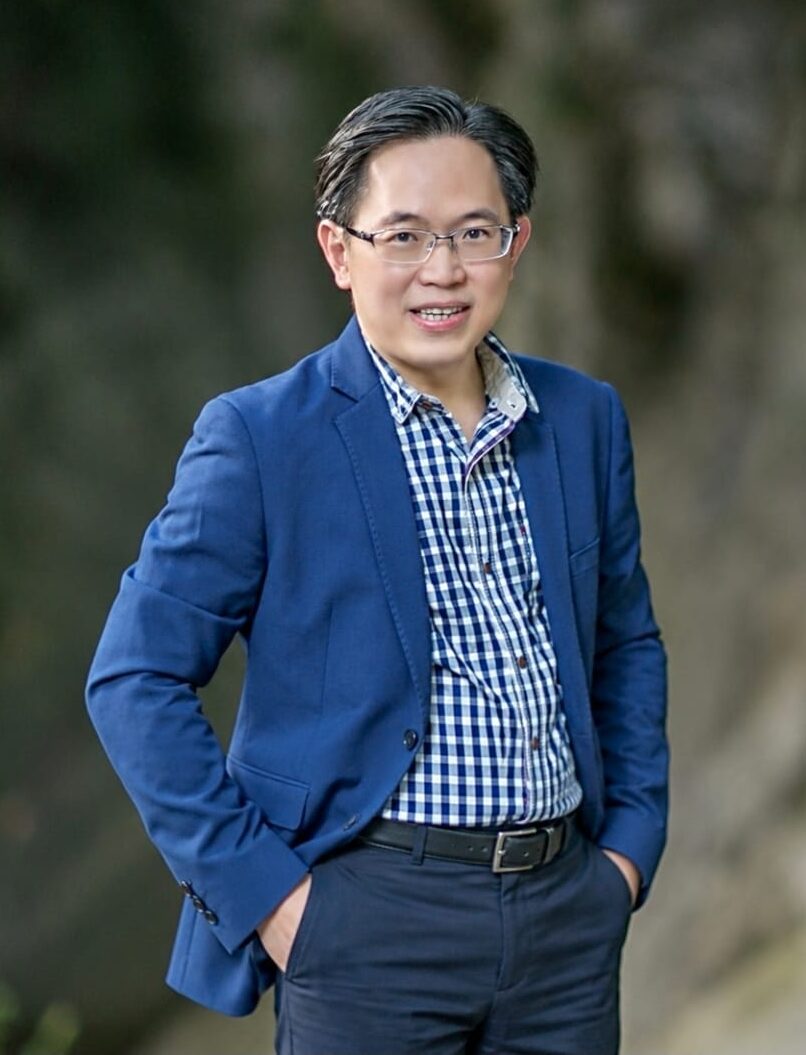
Dr. John Lee is an independent scholar of Buddhist philosophy, specialising in Yogācāra, Madhyamaka, Chinese Buddhism, comparative philosophy, and Buddhist ethics. He holds a Ph.D. in Philosophy from Nanyang Technological University, Singapore, an M.A. in Buddhist Studies from the University of Kelaniya, Sri Lanka, and an M.A. in International Relations from the International University of Japan. His research examines consciousness, meditation, Buddhist philosophy, and the ethical implications of artificial intelligence.
Publishing under the name S. Rusly, he is the author of the scholarly article, “Dharmakīrti’s Scepticism of Non-Cognition of Imperceptible Objects and the Meinongian Account of Them: A Contemporary Philosophical Solution to Buddhist Thought,” published in the Journal of East-West Thought in 2019. He has also written articles and research notes on Buddha-nature, examined through the dialectical perspectives of Jizang, Zongmi, Mou Zongsan, and Yin Shun.
His doctoral dissertation explores Xuanzang’s philosophical defence of the Bodhisattva path, focusing on how the continuity of a conventionally designated person and karmic responsibility can be coherently sustained across an ever-changing stream of experience within Buddhism’s anti-realist framework. He is currently developing book projects on Xuanzang, meditation, and comparative Buddhist philosophy.
Website featured image generated by Gemini AI.