Date: 2 Oct 2026 – 4 Dec 2026 (Every Fri)
Time: 7.30pm – 9pm
Venue: The Buddhist Library (BL)
Fees*: $100.00 (BL Members) ; $200.00 (Non-members)
Click for registration form: Word Version | PDF Version
Membership form: Word Version | PDF Version
*Class Size: Limited to 15 participants to encourage discussion, guided reflection, and deeper learning. All fees are contributions to The Buddhist Library.
About This Course
Course Syllabus:
Nāgārjuna and the Middle Way: Emptiness, Dependent Origination, and Buddhist Practice for Contemporary Life
Course Description:
Nāgārjuna is one of the most profound, influential, and enigmatic thinkers in Buddhist philosophy. Across Buddhist traditions, he has been interpreted in strikingly different ways. Some scholars see him as a philosophical reconstructionist who recovered the pragmatic and non-metaphysical spirit of the Buddha’s teaching. The Mahāyāna traditions often revere him as the “Second Buddha,” the one who clarified the deep meaning of emptiness taught in the Prajñāpāramitā scriptures.
This 10-lesson course introduces Nāgārjuna through selected key chapters of his major work, the Mūlamadhyamakakārikā — the Root Verses on the Middle Way, commonly abbreviated as MMK. The course is designed for both serious students of Buddhist thought and sincere lay practitioners who wish to understand how the Middle Way can transform one’s view, conduct, meditation, and daily life.
Rather than treating Nāgārjuna as merely a difficult philosopher, this course presents him as a guide to wisdom. His central insight is that all phenomena are empty of inherent existence because they arise dependently. Far from being nihilism or relativism, emptiness protects the Buddha’s teaching from both eternalism and annihilationism. It shows us how suffering, identity, conflict, craving, views, and liberation itself are to be understood without clinging.
Each lesson combines textual study, philosophical explanation, guided reflection, chanting, meditation, and practical application.
Course Objectives:
By the end of the course, participants should be able to:
- Understand Nāgārjuna’s central claim that emptiness means the absence of inherent existence.
- Explain why emptiness and dependent origination are not two different doctrines, but two ways of understanding the same reality.
- Understand the relationship between Nāgārjuna’s thought and Early Buddhist teachings such as dependent origination, non-self, impermanence, and the Middle Way.
- Appreciate the development of Prajñāpāramitā literature and its connection to the doctrine of _niḥsvabhāva_ , the absence of own-being or intrinsic nature.
- Understand the two truths in the MMK: conventional truth and ultimate truth.
- Explain why Nāgārjuna’s philosophy is not nihilism, skepticism, or moral relativism.
- Apply the Middle Way to contemporary life, including family relationships, work, wealth, conflict, anxiety, identity, and spiritual practice.
- Integrate philosophical understanding with chanting, meditation, dedication of merits, and compassionate conduct.
Course Format:
Each lesson will include:
- Opening chanting of the Karaṇīya Mettā Sutta
- Short recap of previous lesson
- Lecture and guided explanation
- Close reading of selected MMK verses
- Group discussion
- Practical reflection for daily life
- Chanting of the Heart Sutra
- 10 minutes of meditation
- Dedication of merits
Pre-Requisites:
Participants should have:
- Ability and willingness to study intricate Buddhist philosophical ideas.
- Open-mindedness toward different Buddhist traditions and interpretations.
- Willingness to memorize and chant the Karaṇīya Mettā Sutta and the Heart Sutra.
- Willingness to participate in meditation and dedication of merits.
- Respect for both academic inquiry and devotional Buddhist practice.
- No prior formal training in Buddhist philosophy is required, but participants should be ready for careful thinking and sincere practice.
Course Structure:
Lesson 1 — Who Was Nāgārjuna? Philosopher, Saint, Reconstructionist, or Second Buddha?
Lesson 2 — Early Buddhist Foundations: Dependent Origination, Non-Self, and the Avoidance of Extremes
Lesson 3 — Prajñāpāramitā and the Birth of Radical Emptiness
Lesson 4 — MMK Chapter 1: Examination of Conditions
Lesson 5 — MMK Chapter 24: Emptiness, Dependent Origination, and the Four Noble Truths
Lesson 6 — MMK Chapter 18: Self, Non-Self, and the Limits of Conceptual Proliferation
Lesson 7 — MMK Chapter 15: _Svabhāva_ , Essence, and the Emptiness of Fixed Identity
Lesson 8 — MMK and the Two Truths: Conventional Truth and Ultimate Truth
Lesson 9 — Why Emptiness Is Not Nihilism, Skepticism, or Relativism
Lesson 10 — Living the Middle Way: Nāgārjuna for Contemporary Buddhist Practice
Suggested Reading List:
- Primary Texts
- Nāgārjuna, Mūlamadhyamakakārikā
- Heart Sutra
- Karaṇīya Mettā Sutta
- Selected Prajñāpāramitā passages
- Selected Early Buddhist suttas on dependent origination and the Middle Way
- Recommended Secondary Readings
- Jay L. Garfield, The Fundamental Wisdom of the Middle Way
- David Kalupahana, Nāgārjuna: The Philosophy of the Middle Way
- Jan Westerhoff, Nāgārjuna’s Madhyamaka: A Philosophical Introduction
- Mark Siderits and Shōryū Katsura, Nāgārjuna’s Middle Way
- K. N. Jayatilleke, Early Buddhist Theory of Knowledge
- Karunadasa, Y. Early Buddhist Teachings: The Middle Position in Theory and Practice
- Rupert Gethin, The Foundations of Buddhism
- Walpola Rahula, What the Buddha Taught
- Bhikkhu Bodhi, selected translations on dependent origination
Pedagogical Approach:
This course uses five complementary methods:
- Textual Reading : Participants will engage selected verses from the MMK and related Buddhist scriptures.
- Philosophical Analysis : Key arguments will be explained clearly, with attention to causation, identity, language, truth, and liberation.
- Comparative Buddhist Perspective : The course will compare Nāgārjuna’s thought with Early Buddhism, Theravāda interpretations, Mahāyāna developments, and later Madhyamaka traditions.
- Practice Integration : Each session links philosophy to chanting, meditation, ethical cultivation, and daily life.
- Contemporary Application : Participants will explore how the Middle Way applies to modern problems such as stress, consumerism, identity politics, family conflict, career pressure, aging, death, and spiritual confusion.
Expected Learning Outcomes:
At the end of the course,
- Participants should be able to explain:
- Why emptiness means absence of inherent existence, not nothingness.
- Why dependent origination and emptiness are mutually supportive.
- Why Nāgārjuna is deeply connected to the Buddha’s early teachings.
- How the Prajñāpāramitā sutras shaped the Mahāyāna understanding of emptiness.
- How the two truths function in Buddhist philosophy and practice.
- Why emptiness does not lead to relativism.
- How the Middle Way can guide ethical, meditative, and everyday life.
- Participants should also be able to practice:
- Chanting the Karaṇīya Mettā Sutta
- Chanting the Heart Sutra
- 10-minute silent meditation
- Reflection on dependent arising in daily experiences
- Dedication of merits
- Applying non-clinging in relationships, work, and spiritual practice
Lecturer
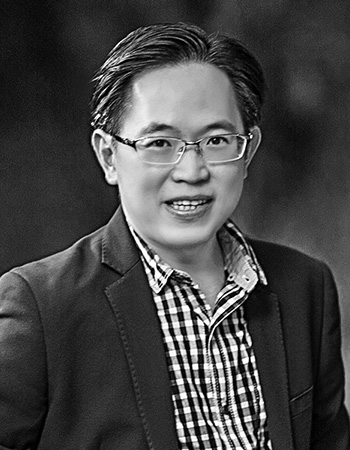
Dr. John Lee is an independent scholar of Buddhist philosophy, specialising in Yogācāra, Madhyamaka, Chinese Buddhism, comparative philosophy, and Buddhist ethics. He holds a Ph.D. in Philosophy from Nanyang Technological University, Singapore, an M.A. in Buddhist Studies from the University of Kelaniya, Sri Lanka, and an M.A. in International Relations from the International University of Japan. His research examines consciousness, meditation, Buddhist philosophy, and the ethical implications of artificial intelligence.
Publishing under the name S. Rusly, he is the author of the scholarly article, “Dharmakīrti’s Scepticism of Non-Cognition of Imperceptible Objects and the Meinongian Account of Them: A Contemporary Philosophical Solution to Buddhist Thought,” published in the Journal of East-West Thought in 2019. He has also written articles and research notes on Buddha-nature, examined through the dialectical perspectives of Jizang, Zongmi, Mou Zongsan, and Yin Shun.
His doctoral dissertation explores Xuanzang’s philosophical defence of the Bodhisattva path, focusing on how the continuity of a conventionally designated person and karmic responsibility can be coherently sustained across an ever-changing stream of experience within Buddhism’s anti-realist framework. He is currently developing book projects on Xuanzang, meditation, and comparative Buddhist philosophy.
Register
Click for registration form: Word Version | PDF Version
Membership form: Word Version | PDF Version
*Class Size: Limited to 15 participants to encourage discussion, guided reflection, and deeper learning.
Website featured image generated by Gemini AI.